
Stadiums and leisure centres are high-footfall environments where safety, security, and operational continuity are critical. From match days and live events to daily public use, these venues rely on robust infrastructure to keep people moving safely while protecting assets and facilities.
For facilities managers, doors play a far more significant role than simple access points. When they fail – whether through damage, wear, or unauthorised access – the impact can be immediate and disruptive.
Emily Mathews, General Manager at Robust UK, explains how modern steel door solutions are helping venues maintain security, reduce downtime, and operate more efficiently.
Why Door Performance Matters in High-Traffic Venues
In busy stadiums and leisure facilities, doors are exposed to constant use and occasional abuse. Heavy footfall, crowd pressure, weather exposure, and accidental damage all contribute to wear over time.
When a door becomes compromised, it creates:
- Immediate security vulnerabilities.
- Potential safety risks for occupants.
- Disruption to daily operations and events.
- Increased pressure on facilities teams.
The priority is always to restore security quickly — without interrupting the operation of the venue.
The Limitations of Traditional Boarding-Up Methods
Historically, damaged doors have been secured using temporary boarding solutions. While this approach provides a short-term fix, it presents several challenges in modern public environments.
Boarded-up entrances can:
- Detract from the professional appearance of the venue.
- Signal vulnerability to opportunistic intrusion.
- Disrupt customer perception and visitor experience.
- Restrict operational access.
Manned guarding is sometimes used as an alternative, but this approach is resource-intensive, costly, and difficult to sustain over longer periods.
For facilities managers under pressure to maintain both security and presentation, these solutions often fall short.
Temporary Steel Doors: A Smarter Security Solution
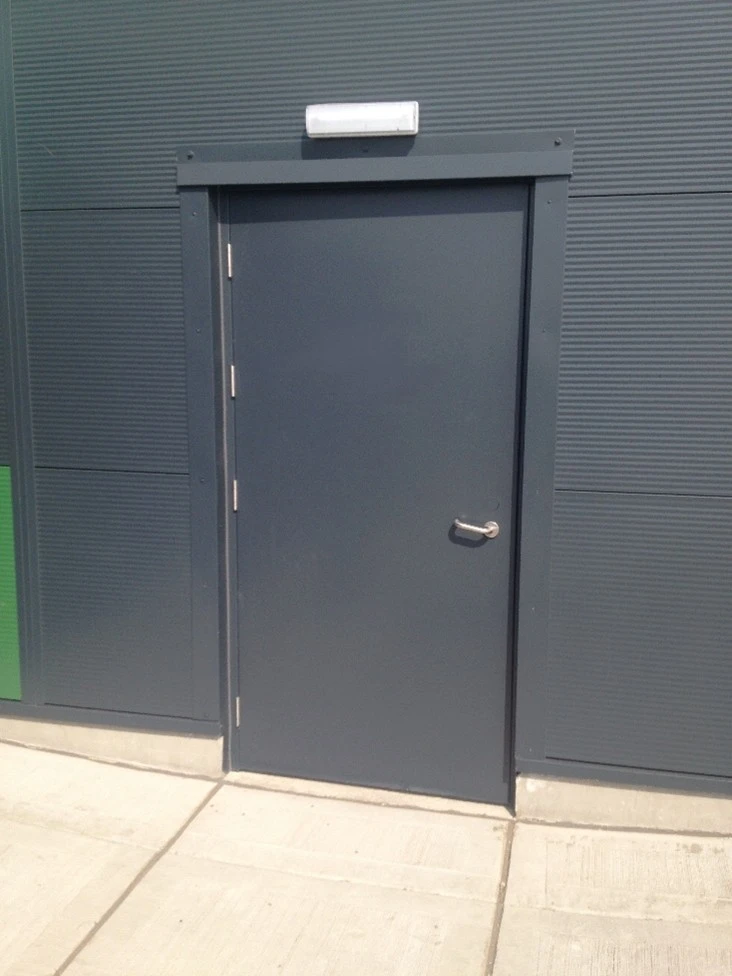
To address these challenges, temporary steel doorsets have emerged as a more effective alternative. Designed for rapid deployment, these solutions allow facilities teams to secure compromised entrances quickly and professionally.
Key benefits include strong, impact-resistant construction; fast availability with standard sizing; flexibility with adjustable widths; re-usability; minimal disruption to daily operations, and maintaining the visual appearance of the building.
Because they can often be delivered or installed within tight timeframes, temporary steel doors significantly reduce the window of vulnerability following a security breach.
They are also increasingly used during planned works, including refurbishments, upgrades, and phased construction projects, where maintaining secure access is essential.
Supporting Operations During Refurbishment & Events
Beyond emergency use, temporary doorsets play an important role in maintaining operational continuity.
Facilities teams use them for a variety of scenarios, including to secure restricted zones during upgrades, maintain access control in phased refurbishments, protect back-of-house areas, and support crowd management strategies.
Some organisations are even leveraging temporary doors as rental assets, turning a practical solution into an additional revenue stream while enhancing site security.
Addressing the Growing Risk of Fire Exit Misuse
While reactive security is important, many stadiums and leisure centres face an ongoing challenge: unauthorised access through fire exits.
These doors are essential for safe evacuation, but they can also represent a weak point in the building’s perimeter if not properly specified.
Common issues include:
- Basic hardware offering limited resistance to forced entry.
- Lack of integration with wider security systems.
- High exposure to tampering in public area.
In large venues, where main entrances are heavily monitored, fire exits can become the easiest target for intrusion.
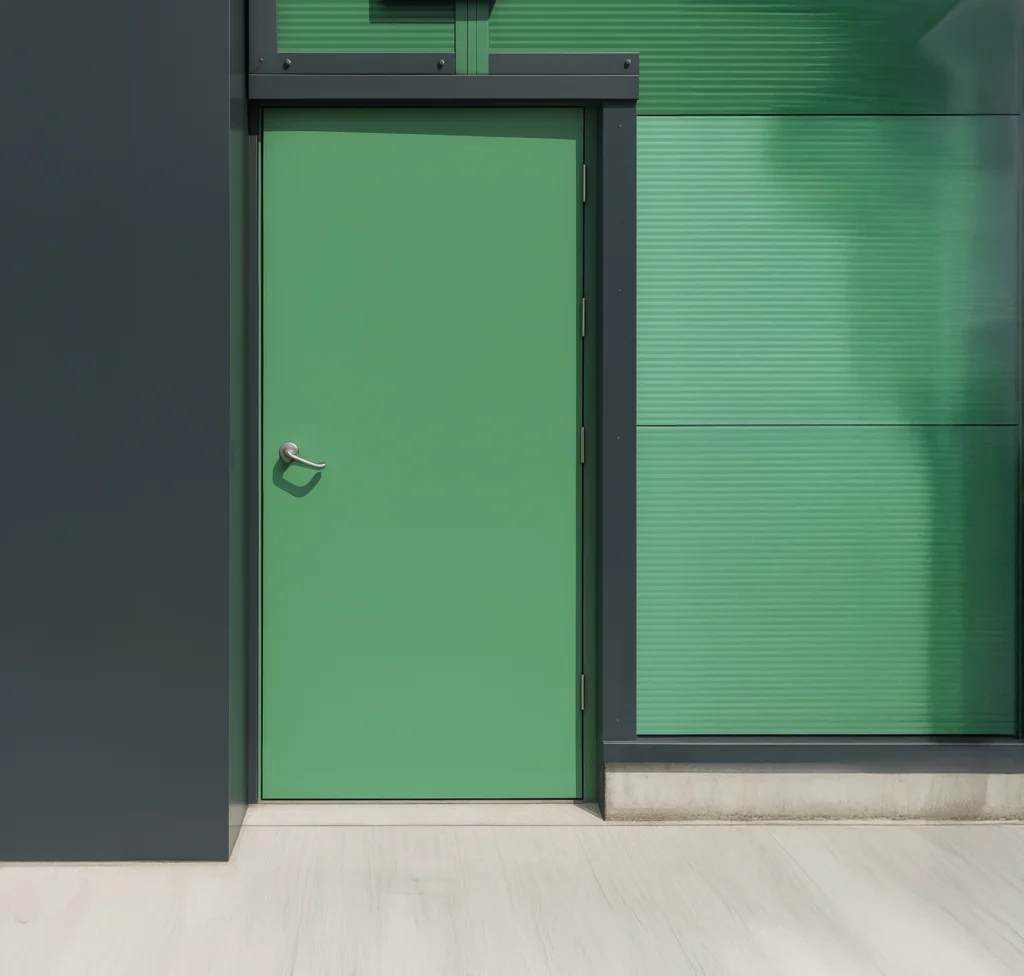
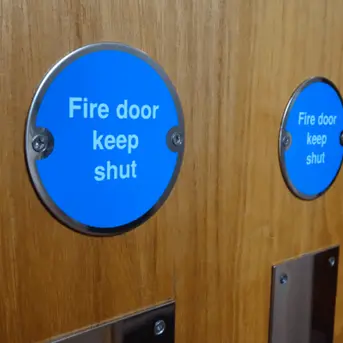
Modern steel fire exit doorsets are designed to overcome this challenge by delivering both compliance and security.
Security-rated fire exit doors are designed to deliver both safety and security without compromise. These doorsets provide enhanced resistance to forced entry, helping to protect vulnerable access points. Their durable construction ensures they can withstand the demands of high-traffic environments, while high-performance panic hardware allows for safe, efficient egress in an emergency. This dual functionality ensures that doors can perform effectively in an emergency while also protecting against unauthorised access during normal operation.
For facilities managers, this represents a more strategic approach — reducing risk while improving long-term reliability.
Strengthening the Security Perimeter
The overall performance of a building’s doors has a direct impact on security, safety, and operational efficiency. In high-profile public venues such as stadiums and leisure centres, even a single weak point can lead to disruption, financial loss, or reputational damage.
Investing in high-quality steel security doorsets – both temporary and permanent – enables facilities teams to maintain a secure perimeter, reduce reactive maintenance, improve resilience against damage and intrusion, and support safe and efficient daily operations.
As expectations around safety and security continue to rise, robust door solutions are becoming an essential part of modern venue management.
Expert Security Door Solutions for Public Venues
Robust UK designs and manufactures high-performance steel security doorsets for demanding environments, including stadiums, leisure centres, and other public buildings.
To learn more about available solutions, visit: our Sports & Leisure sector page here, or visit https://www.robust-uk.com/product-category/security-doors/
To discuss your requirements or obtain expert specification advice, contact our estimating team on 01782 592900 or