
With the removal of references to BS 476 from Approved Document B in England approaching in September 2029, the construction industry has an important transition to prepare for. The move towards EN fire testing standards will affect more than just manufacturers, with architects, specifiers, contractors, installers and building owners all needing to understand what the changes mean for fire door specification, testing and compliance.
While the transition has come into greater focus over the past 12 to 18 months, there are still questions around how the changes will affect existing specifications, what evidence should be requested and how to ensure fire doors meet the requirements of future projects. Understanding the differences between the standards now will help the wider supply chain prepare and make informed decisions with confidence.
What Does the Transition from BS 476 to EN Standards Mean?
BS 476 is the long-standing British series of fire test standards, with Part 22 covering the fire resistance of non-load-bearing elements, including fire doors. In England, references to BS 476 are being removed from Approved Document B from 2 September 2029, moving towards a clearer European testing and classification route. This includes BS EN 1634-1 for testing and BS EN 13501-2 for classification.
For specifiers, this means considering not only whether a door meets the performance requirements of a project, but also whether the supporting test evidence and certification are appropriate for the intended application.
Contractors also need to understand the limitations of the evidence behind the fire doors they are installing, ensuring the specified product, configuration and installation align with the tested application.
In specification terms, this means moving from familiar FD classifications such as FD30 or FD60 towards EN classifications such as E30, E60, EI30 or EI60, depending on whether the requirement is integrity only or integrity and insulation. Where required, smoke control should be specified separately, for example through SA or S200 classifications.
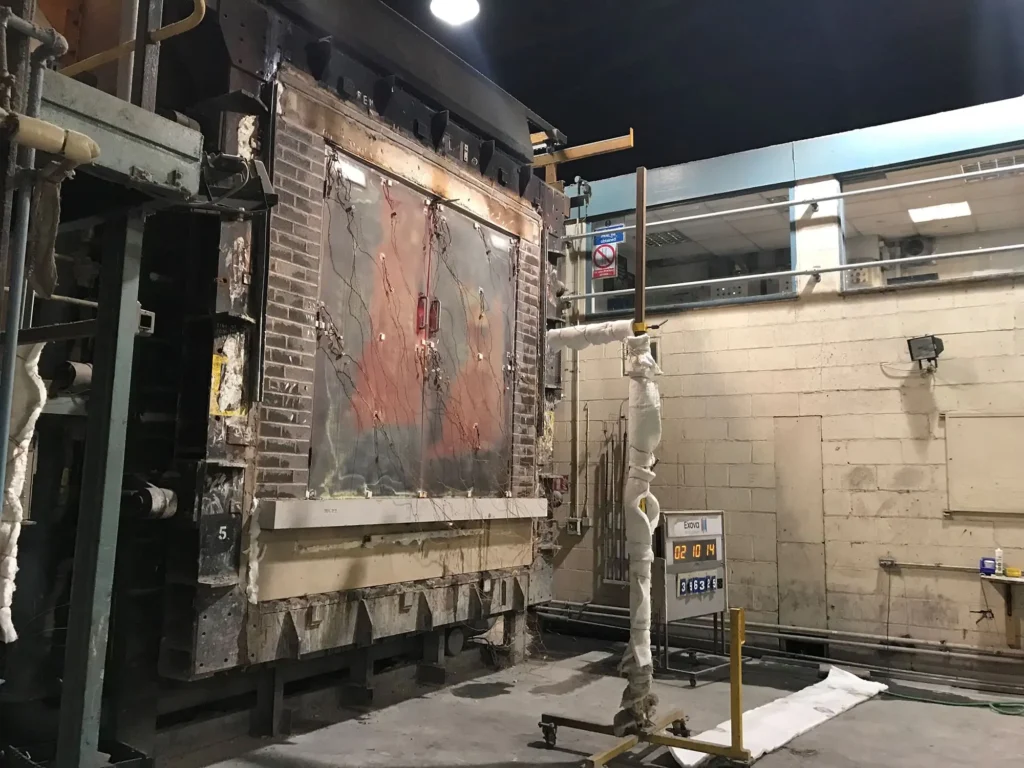
BS EN 1634-1 uses different and more demanding test conditions than BS 476-22. This means fire doors that have passed testing under BS 476-22 may not meet compliance under BS EN 1634-1.
Therefore, when working on new projects, architects and specifiers must consider which standards and fire classifications are used to assess fire doors, ensuring the products specified meet the relevant compliance requirements.
Navigating the Transition
One of the biggest challenges is uncertainty around whether existing specifications will remain suitable for future projects. The transition does not automatically mean existing BS 476-tested doors must be replaced. Fire doors already in place will remain fit for purpose as long as they continue to meet safety requirements.
For new projects likely to be approved, procured or completed beyond the transition period in England, EN test evidence and classification should be considered early, subject to the project’s approval route and local requirements.
Customers need confidence that the products they specify today will remain compliant and support the long-term needs of the building. This means seeking clarity around what supporting documentation they should be requesting and how product performance is demonstrated under EN standards.
Architects should ask for third-party test evidence and certification that matches the full doorset being specified. They should confirm the rating required by the fire strategy, the wall construction, the door size, the leaf arrangement, glazing, louvres, hardware, smoke control and intended use.
As door manufacturers, the important principle for us is that fire doors should be supplied as a complete system that is fully tested, not as a collection of interchangeable parts. At Robust UK, we have been testing to EN standards for many years, which means we are in a position to help customers understand what the changes mean in practice so they can make informed decisions with confidence.
Start the Conversation Early
Architects, specifiers and contractors should start discussions around standards and compliance now to ensure a smooth transition. By engaging with manufacturers early in the design process, they can ensure specifications are aligned with future requirements and confirm that the requested configurations meet EN fire testing standards and classification from the outset.
Specifications being designed now may still be procured, installed, inspected or maintained after the change. For Wales, Scotland, Northern Ireland and the Republic of Ireland, customers should check the local building guidance and project approval route, because each jurisdiction may adopt or reference standards differently.
Ultimately, new specifications should be reviewed carefully if the project is likely to run beyond 2029.
The transition should not be viewed as a challenge to overcome at the last minute. It is an opportunity for the industry to improve consistency, transparency and confidence in the way product performance is demonstrated and specified.
Expert Advice
For more information, our estimating team are available on 01782 592900 or via .